
Last updated November 22, 2026
 Sweep & inspection
 Caps & crowns
 Flue relining
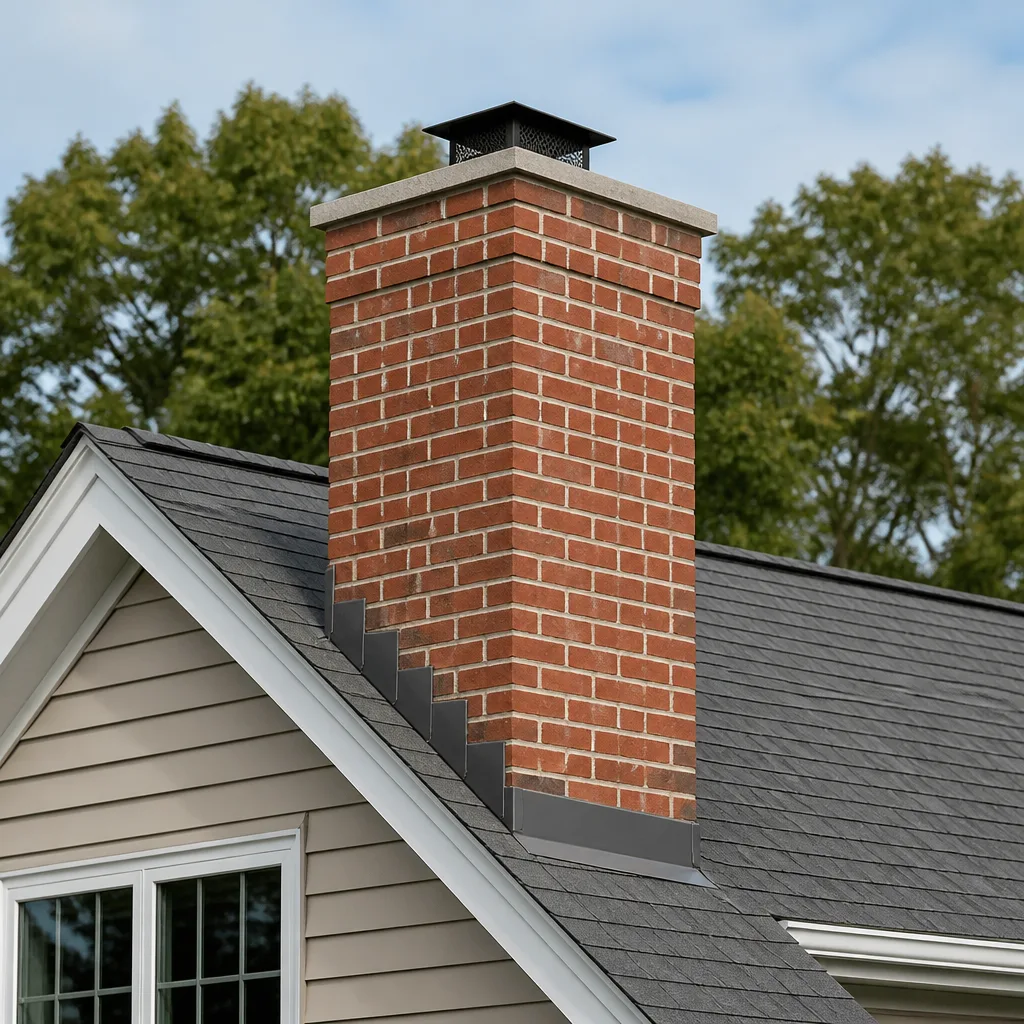 Masonry repair
 Gas fireplace service
Level 1 sweep and inspection to the NFPA 211 annual standard - flue, crown, cap, and flashing checked and photographed
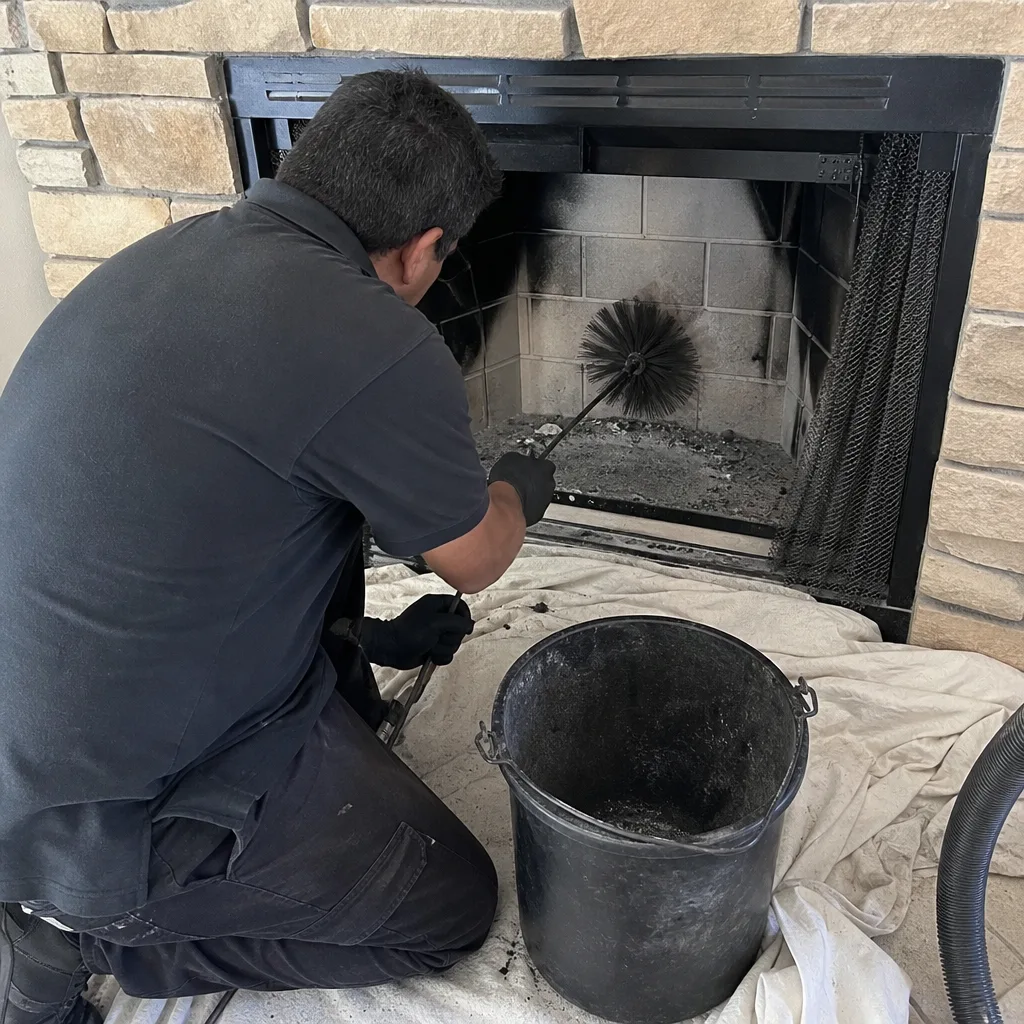
Chimney sweep logs do not sweep chimneys. They loosen some creosote - which then falls where a brush and vacuum still have to collect it.
Seasonal Chimney Cleaning Care for Porter Ranch: Year-Round Homeowner’s Guide
Most guides say “clean before winter.” In Porter Ranch, that advice alone leaves a chimney vulnerable for nine months of the year. The dry season here creates its own category of hazards that a single annual cleaning doesn’t address: birds pack flues with nesting material in spring, dust and debris build up through a rainless summer, and the first cold snaps arrive with Santa Ana winds pushing embers across dry roofs. Then, because fires are infrequent, each burn lays down creosote faster than it would in a home burning daily. This guide walks you through a full calendar of chimney care for Porter Ranch, season by season, so the system stays safe from the first cool evening to the last.
Quick Answer
Chimney care in Porter Ranch works best on a seasonal rhythm rather than a single yearly sweep: check the cap and flue for bird nests and moisture intrusion in spring, do a mid-year visual check before Santa Ana wind season, book your professional sweep and inspection in September or October ahead of the first fires, and monitor creosote through winter by watching your burn habits. Service frequency should follow your actual burn hours, not the calendar alone.
Styles & brands we work with
- Sweep & inspection
- Caps & crowns
- Flue relining
- Masonry repair
- Gas fireplace service
Table of Contents
- Why Porter Ranch Chimneys Age Differently
- Spring: Post-Season Inspection and Bird Control
- Summer: The Mid-Year Check Before Fire Season
- Fall: The Pre-Season Cleaning Window
- Winter: Burn Habits and Creosote Formation
- How Often Should You Really Sweep?
- What You Can Check Yourself vs. What Needs a Pro
- Common Mistakes to Avoid
Why Porter Ranch Chimneys Age Differently
Porter Ranch sits in a warm, dry inland valley climate with a long fire season and a short, mild rainy stretch. That combination shapes chimney wear in ways that a generic national maintenance checklist misses. The biggest factor is burn frequency. Many Porter Ranch households light a fire a few evenings a week for a couple of months, then leave the fireplace dark the rest of the year. Those gap weeks matter. A chimney that never gets fully warmed dries out slowly between burns, and a cold flue produces more smoke condensation, which is the raw material for creosote.
The local landscape adds pressure from the outside. Porter Ranch borders open hillside where native brush and wildlife are close by. Chimney caps and flues become attractive real estate for birds and small animals looking for shelter. Add the seasonal Santa Ana winds, which drive fine dust and grit into any opening that isn’t properly covered, and you have a chimney that accumulates debris even when you never strike a match.
So the calendar here needs three tracks running at once:
- Moisture control – keeping rain and dust out of the flue and off the crown, especially during the March rains.
- Wildlife and debris control – verifying that caps and screens are intact before nesting season and again before wind season.
- Creosote control – matching how often we sweep to how hot and how often you actually burn.
That’s the core of our approach at Chimney Sweep Porter Ranch. A clean chimney is the starting point, not the finish line. The sweep tells us what condition the system is in, and the inspection tells us what to do about it.
Spring: Post-Season Inspection and Bird Control
Spring is the most overlooked chimney season in Porter Ranch, and it’s where the biggest silent problems start. Two things happen at once: the last rains of the year test your crown and flashing, and local birds begin scouting for nesting spots. Sparrows and swifts are common in Porter Ranch flues, and an open chimney with a missing or damaged screen is exactly what they’re looking for.
What spring care involves
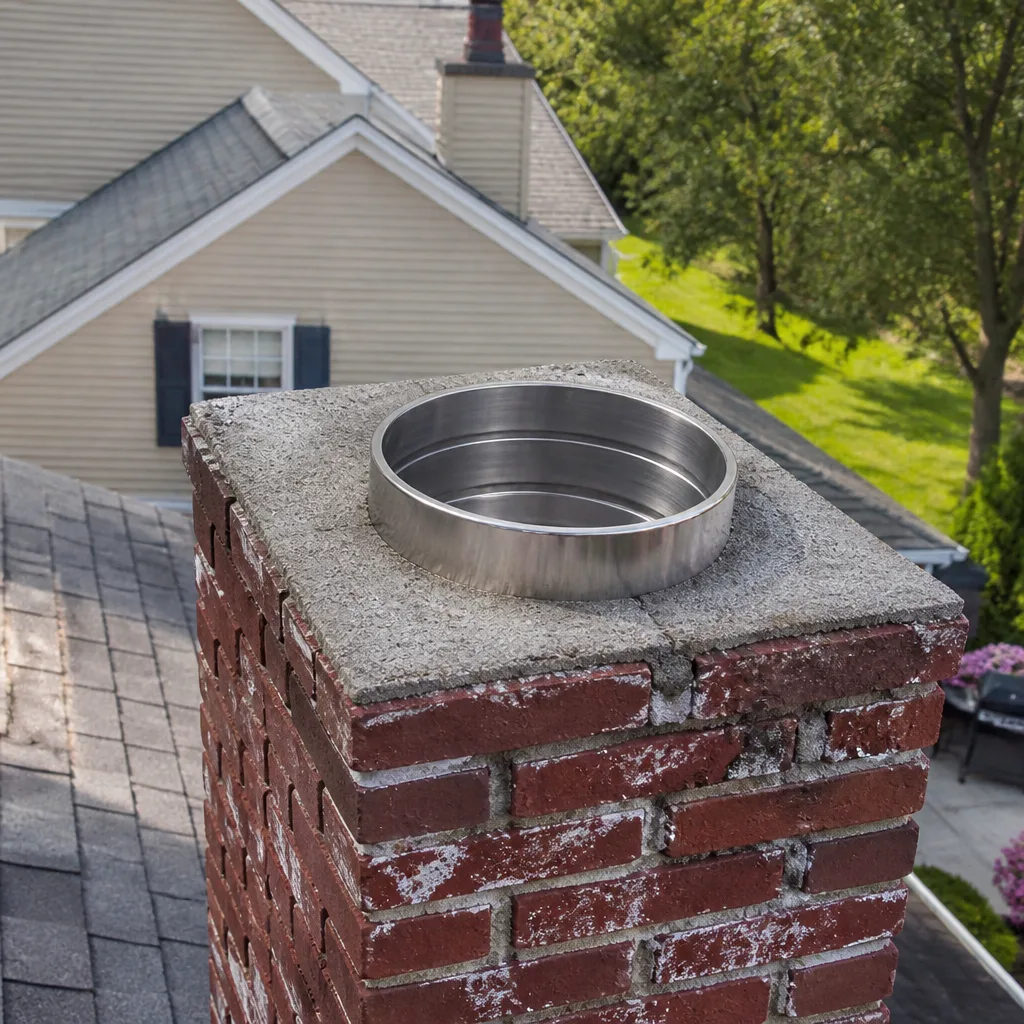
- Inspect for moisture intrusion. Look for water stains, efflorescence (white powder), or crumbling mortar on the exterior chimney and inside the firebox. March rains reveal weaknesses that a dry summer hides.
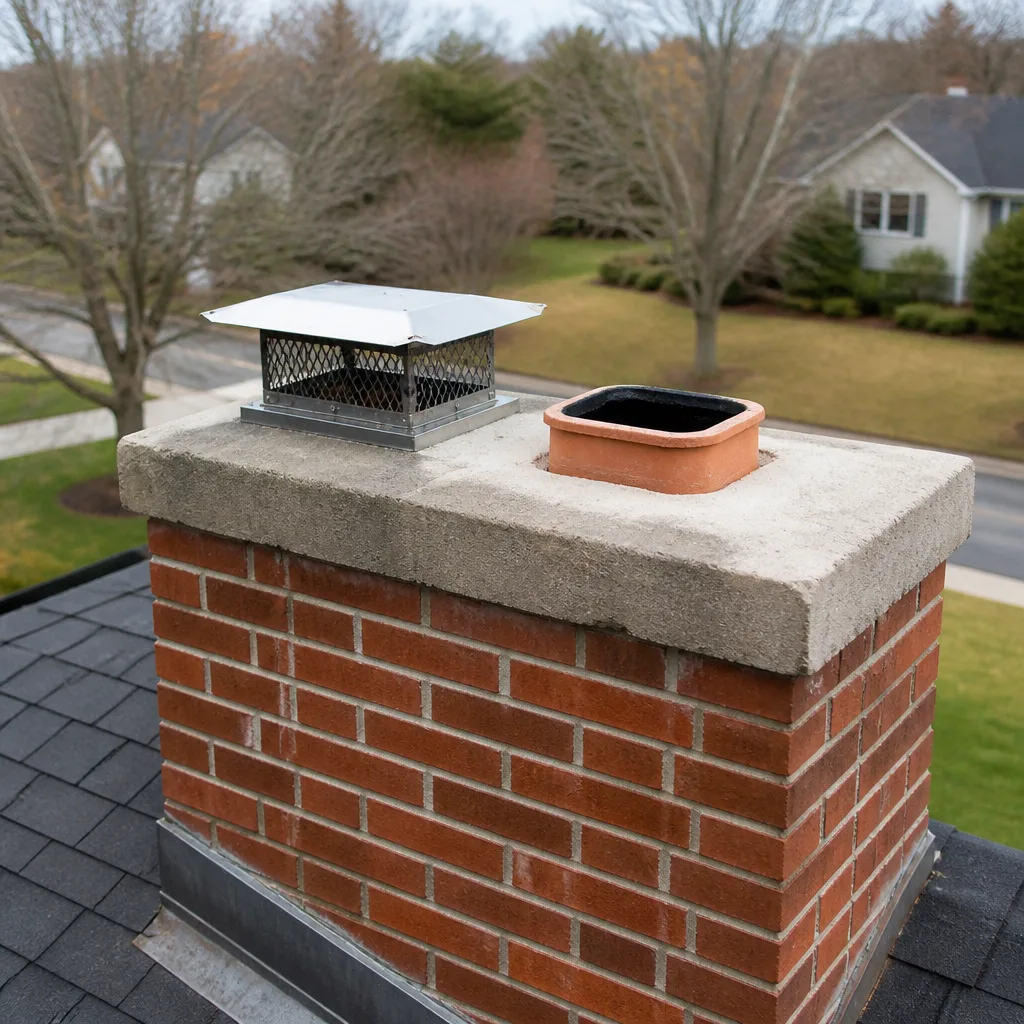
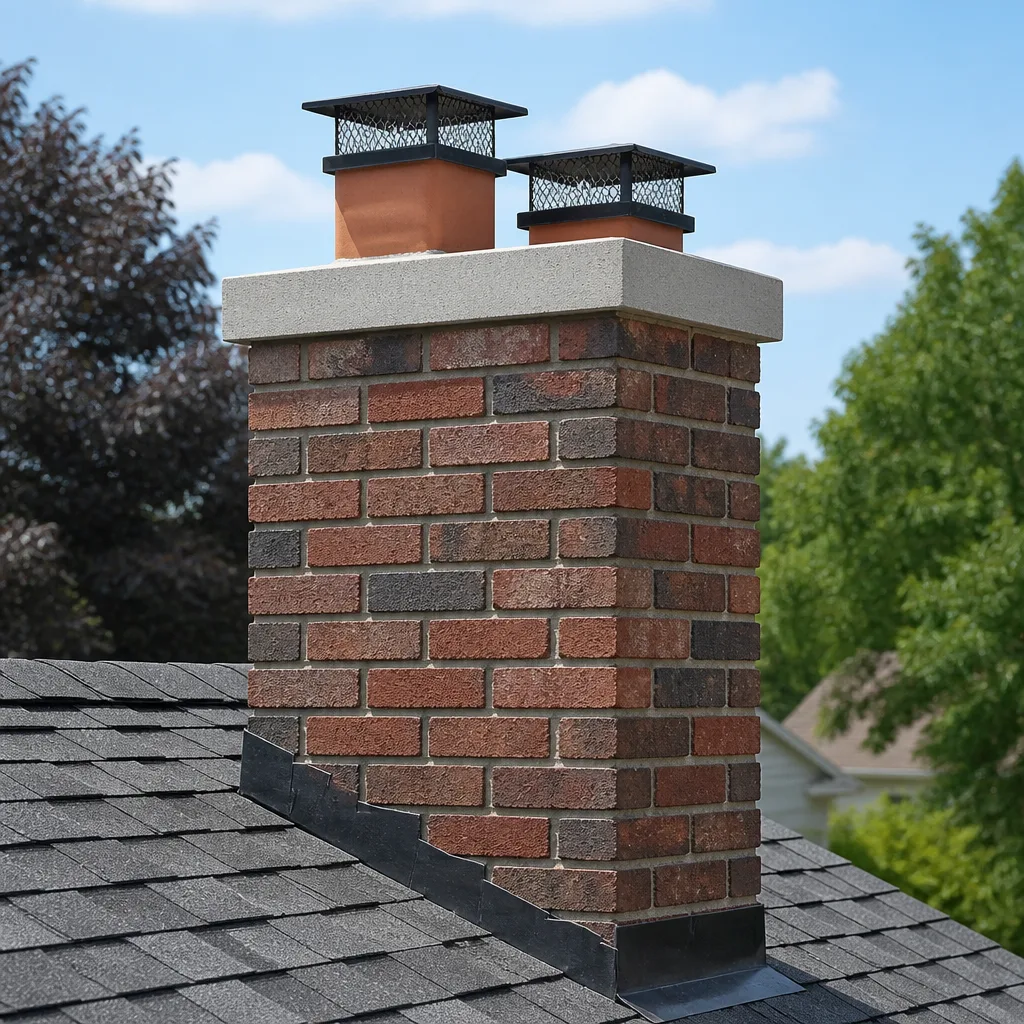
- Check the cap and screen. A chimney cap & crown in good condition keeps rain, animals, and wind-driven debris out. Torn mesh or a loose cap is an open invitation.
- Clear any nest material. If birds have already moved in, the nest needs professional removal. Nest material is highly flammable and blocks airflow.
- Confirm the crown is draining. A cracked crown lets water pool and seep into the masonry, which leads to spalling brick over time.
We install professional-grade caps from Gelco and Famco because a generic hardware-store cover often doesn’t match the flue size or hold up to wind. The right cap for your specific system is a small detail with an outsized effect on how much water and wildlife get in.
Why spring and not summer
By summer, nesting season is well underway. A nest that’s been sitting in the flue for weeks is denser, harder to clear, and carries more risk if a fire is lit. Catching it in spring, before it becomes established, is easier and safer. It also leaves the flue clean going into the dry months when you’re least likely to think about the chimney.
Summer: The Mid-Year Check Before Fire Season
Here’s the counterintuitive part: a chimney you haven’t used all summer still needs attention before fall. The dry season in Porter Ranch runs hot and long, and the Santa Ana winds that arrive in late summer and fall carry fine dust and grit that find every gap. A cap with a small crack or a screen with a bent edge won’t show symptoms until you light the first fire and smoke backs up.
A summer visual check is quick, and it catches the things that develop in the off-season:
- New animal intrusion since the spring check
- Cap or screen damage from wind or heat
- Debris and dust accumulation on the smoke shelf
- Loose flashing or deteriorated sealant around the chimney
- Bird nests re-established above the damper
The mid-year check is mostly visual. It doesn’t replace a full inspection, and it isn’t a sweep. Its job is to confirm the system is still closed against the outside before wind season stresses it. If your chimney cap is showing its age, this is also the calmest time of year to get it replaced rather than scrambling once the first cold snap arrives.
We often hear from Porter Ranch homeowners who skipped the summer check and discovered a nest in October. The fix is the same, but the timing is worse. Getting the visual done in July or August gives you a clean runway into the fall.
Fall: The Pre-Season Cleaning Window
Fall is the season everyone thinks of for chimney care, and for good reason. But the timing within the season matters more than most people realize. The proper window in Porter Ranch is September through October, before the first fires of the year. Waiting until December is a timing mistake, because by then you’ve already burned several fires on top of whatever accumulated through spring and summer, and you may well have lit a fire into a blocked or heavily creosoted flue without knowing it.
A pre-season routine that works
- Book the sweep early. Schedule the cleaning and inspection in September or October, before the schedule fills with last-minute calls.
- Get a camera inspection. A camera inspection shows you the actual condition of the flue liner, not just a guess. You see what we see.
- Address repairs before the first fire. A cracked liner, a loose crown, or a damaged cap is easier to fix in mild fall weather than in the middle of a cold streak.
- Stock dry firewood. Seasoned wood with low moisture content is the single biggest factor in how much creosote forms per burn.
We connect you with a chimney sweep who handles the cleaning and a trained technician who handles the inspection in the same visit. One company, one appointment, no handoff. The written estimate sets the final price, and the flat-price sweep is agreed before booking, so there are no surprises.
Why the pre-season inspection is the real work
A sweep removes what’s there. An inspection tells you what caused it. If your flue has heavy creosote after one season, that points to a burn-habit or wood-moisture problem worth correcting. If the liner is cracked, that’s a safety issue that cleaning alone won’t fix. Fall is when a real diagnosis is worth the most, because it gives you a whole season of safe burning instead of a winter of not knowing.
Winter: Burn Habits and Creosote Formation
Winter is when creosote forms, and in Porter Ranch the pace is faster than you’d expect because fires are intermittent. Creosote builds in recognizable stages, and how you burn determines which stage you reach and how fast.
The creosote stages
- Stage 1: Soot and light flaky deposits. Easy to sweep and usually harmless.
- Stage 2: Hard, glossy, or crunchy deposits. Tougher to remove, and a sign of cooler, smoldering fires.
- Stage 3: Glazed, tar-like buildup. This is the dangerous stage, hard to remove, and it can ignite if the flue gets hot enough.
Two factors drive you toward stage 2 and 3: wood moisture content and burn temperature. Wet or unseasoned wood burns cool and produces more smoke, and cool smoke condenses on the flue walls as creosote. Hot, well-seasoned wood burns cleaner. The catch in Porter Ranch is that many households burn a few fires a week, so the flue is cold at the start of every burn. That cold start produces a burst of condensation before the flue warms up. Over the course of a season, an intermittent burner can lay down stage 2 deposits faster per cord burned than a household burning daily.
We’ve seen this pattern repeatedly in the area. The fix isn’t necessarily to burn more often, but to burn better: seasoned wood, a hot fire rather than a slow smolder, and a sweep scheduled based on your actual burn hours rather than a fixed date. If your flue is showing stage 2 or 3 deposits, that’s a signal to shorten your interval between sweeps.
Winter habits that pay off
- Burn only seasoned, dry wood – low moisture content means less smoke.
- Avoid long smoldering overnight burns; they’re the fastest route to creosote.
- Keep the damper fully open until the fire is established and the flue is warm.
- Watch for smoke rolling back into the room, which signals a flow problem worth a professional look.
- Schedule your next sweep based on how much you actually burn, not just the month on the calendar.
If your fireplace itself is showing problems like a cracked firebox, a damaged damper, or failing refractory panels, that’s fireplace repair territory, not a cleaning issue. A sweep is the starting point; the repair is a separate, specific job.
How Often Should You Really Sweep?
The standard rule of thumb is an annual inspection, but the right sweep interval depends on how much you actually burn. In Porter Ranch, with its intermittent cold season, a fixed calendar interval can leave you either over-sweeping an under-used chimney or under-sweeping a heavy-use one. The better approach ties sweeping to burn hours.
Matching the interval to your burn habits
- Light use (a handful of fires across the season): an annual inspection, with a sweep when the inspection shows accumulation, usually works.
- Moderate use (a few fires a week through winter): inspect and sweep more than once if deposits build to a noticeable layer.
- Heavy use (daily fires through the season): sweep based on visible accumulation, and don’t wait a full year if the flue is showing stage 2 deposits.
A camera inspection is the honest way to decide. It shows the layer thickness and the creosote stage, so the recommendation comes from what’s actually inside the flue rather than a guess from a fixed schedule. We don’t recommend work you can’t verify. If the camera shows the flue is clean enough to wait, we’ll tell you so. If it shows a stage 2 layer, that’s the reason for a sweep you can see for yourself.
Our technicians have up to 13 years of experience reading these conditions, and the recommendation always traces back to what the camera and the visual inspection actually show. Nothing is recommended without evidence you can review.
What You Can Check Yourself vs. What Needs a Pro
Some chimney care is safe for a homeowner to handle. Some is not. The line falls where height, fire risk, or structural work is involved. Here’s how to sort it.
Safe for you to check
- Looking up the flue from the firebox with a flashlight for obvious blockages or nest material near the damper
- Checking the cap and screen from the ground with binoculars for visible damage
- Looking for water stains, efflorescence, or cracked mortar on the exterior chimney
- Watching for smoke rollback or unusual smells when you burn
Needs a professional
- Removing a nest or debris from inside the flue
- Any work on the roof, crown, or cap
- Inspecting or repairing the liner
- Assessing creosote stage or glazed deposits
- Firebox, damper, or refractory repair
A safety note: an obstructed flue or a damaged liner can put carbon monoxide into your living space, and a heavily creosoted flue can ignite. We don’t recommend chimney-cleaning tools or roof work for homeowners, and we won’t give step-by-step instructions for anything that involves height or fire risk. Read your system, then call a trained professional.
Common Mistakes to Avoid
These are the patterns we see most often in Porter Ranch, and each one turns a routine job into a bigger one.
- Cleaning only in December. The pre-season window is September through October. Waiting until December means you’ve likely already burned on top of a season of accumulated debris.
- Skipping the summer check. A chimney that sat unused all summer still collected bird nests, wind-blown grit, and cap damage. The mid-year visual is what catches it before fall.
- Assuming the cap is fine. A cap that looks intact from the ground can have a cracked crown underneath or a mesh screen torn by wind. Have it checked, not eyeballed from the driveway.
- Burning wet wood. In a Mediterranean climate, firewood can seem dry on the outside and be damp inside. Moisture content is the biggest driver of creosote per burn.
- Treating a sweep as a diagnosis. A discount sweeper who cleans and leaves may never notice a cracked liner. The inspection is what protects you.
- Ignoring a nest “because it’s out of season.” Nest material blocks flow and is flammable. It doesn’t become safe by sitting there.
- Following a fixed annual schedule blindly. A chimney used heavily needs more frequent sweeping than one lit a handful of times. Let the camera inspection set the interval.
See the difference
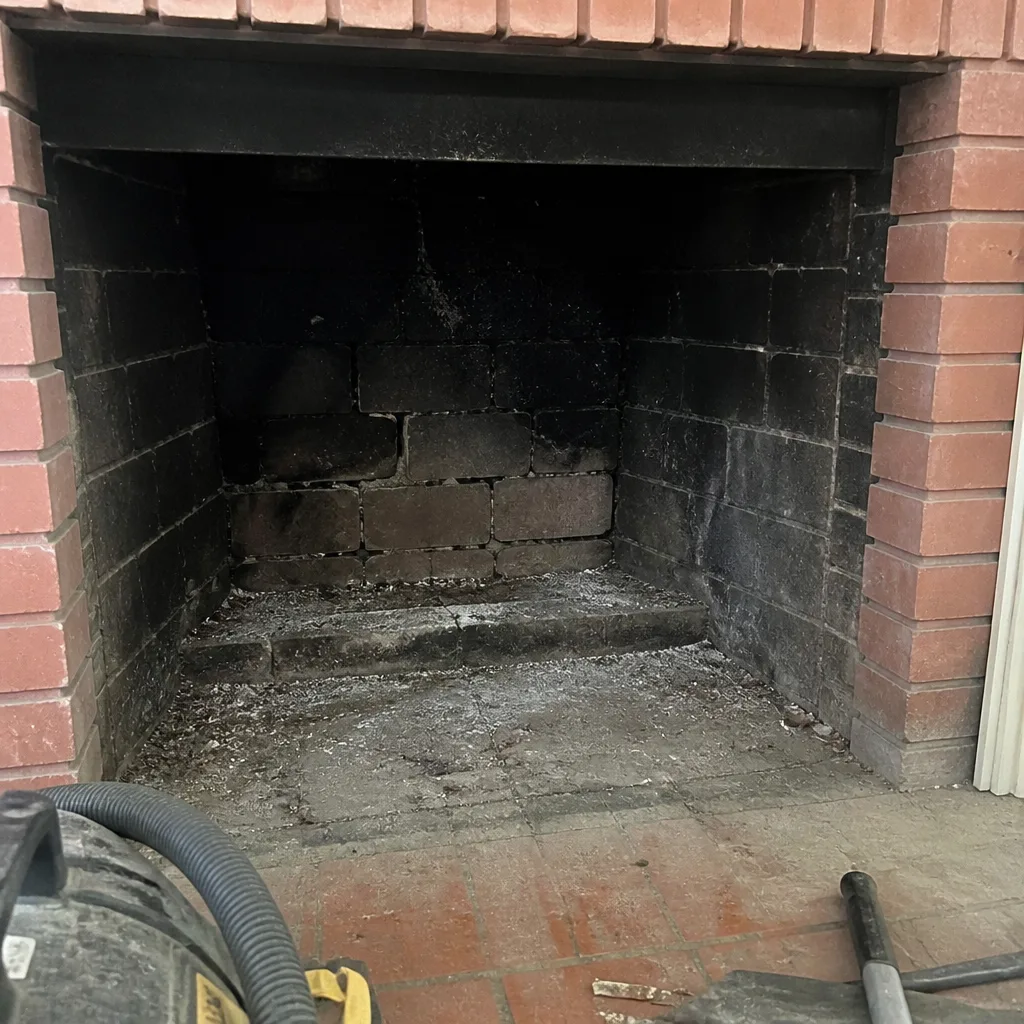 Before
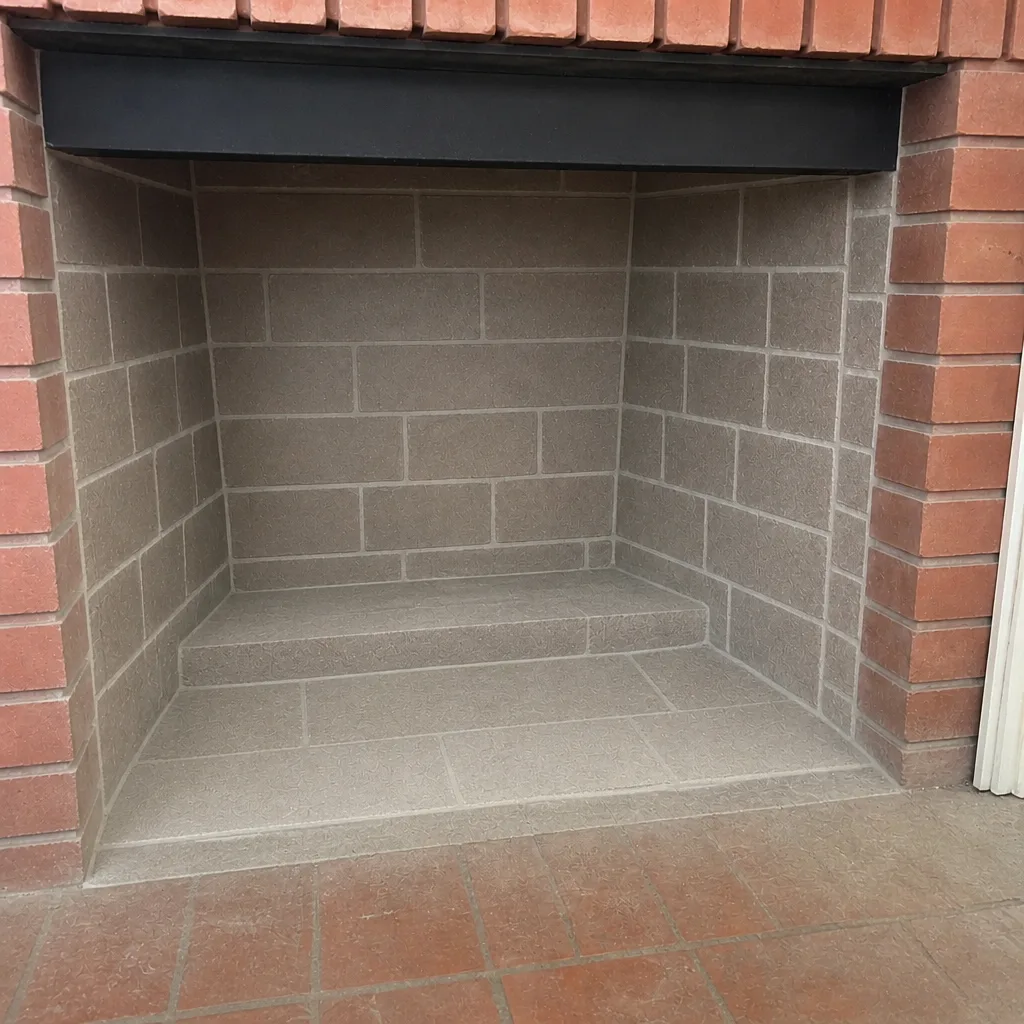 After
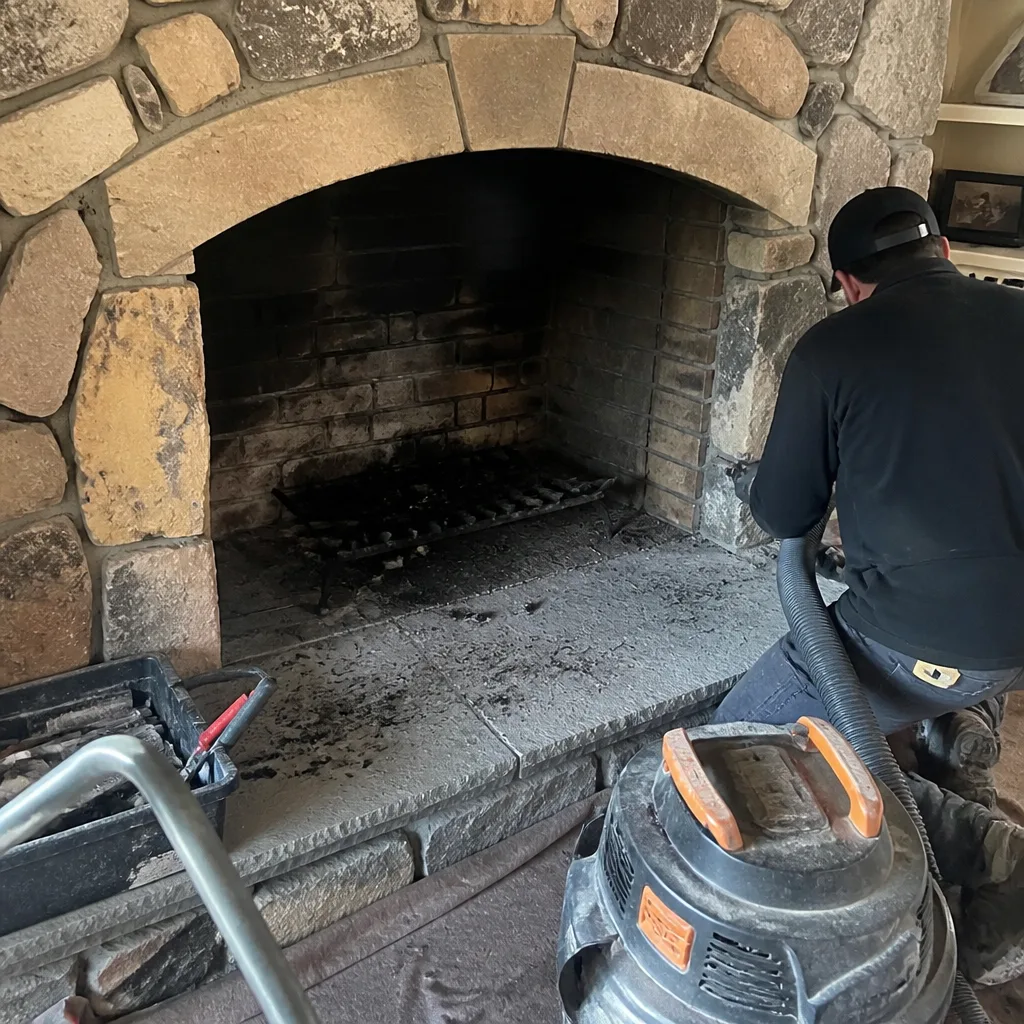 Before
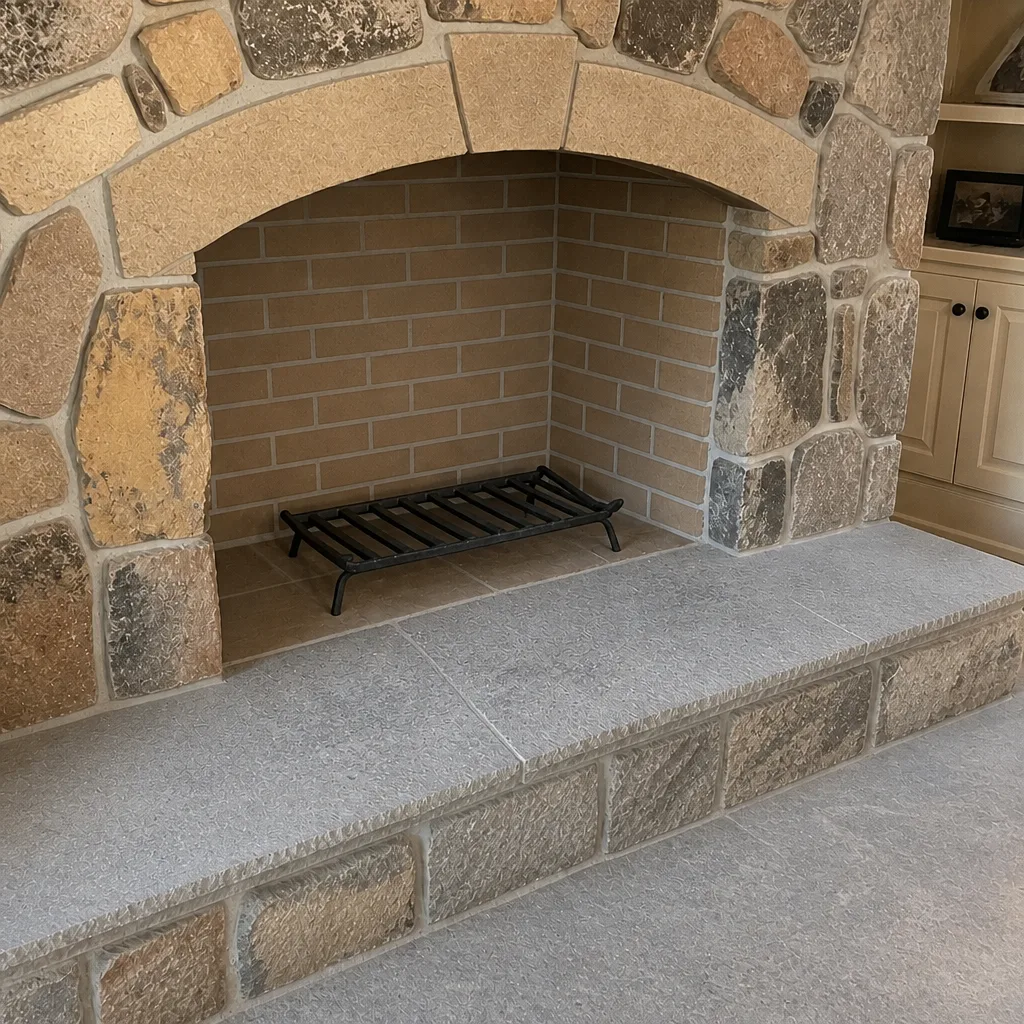 After
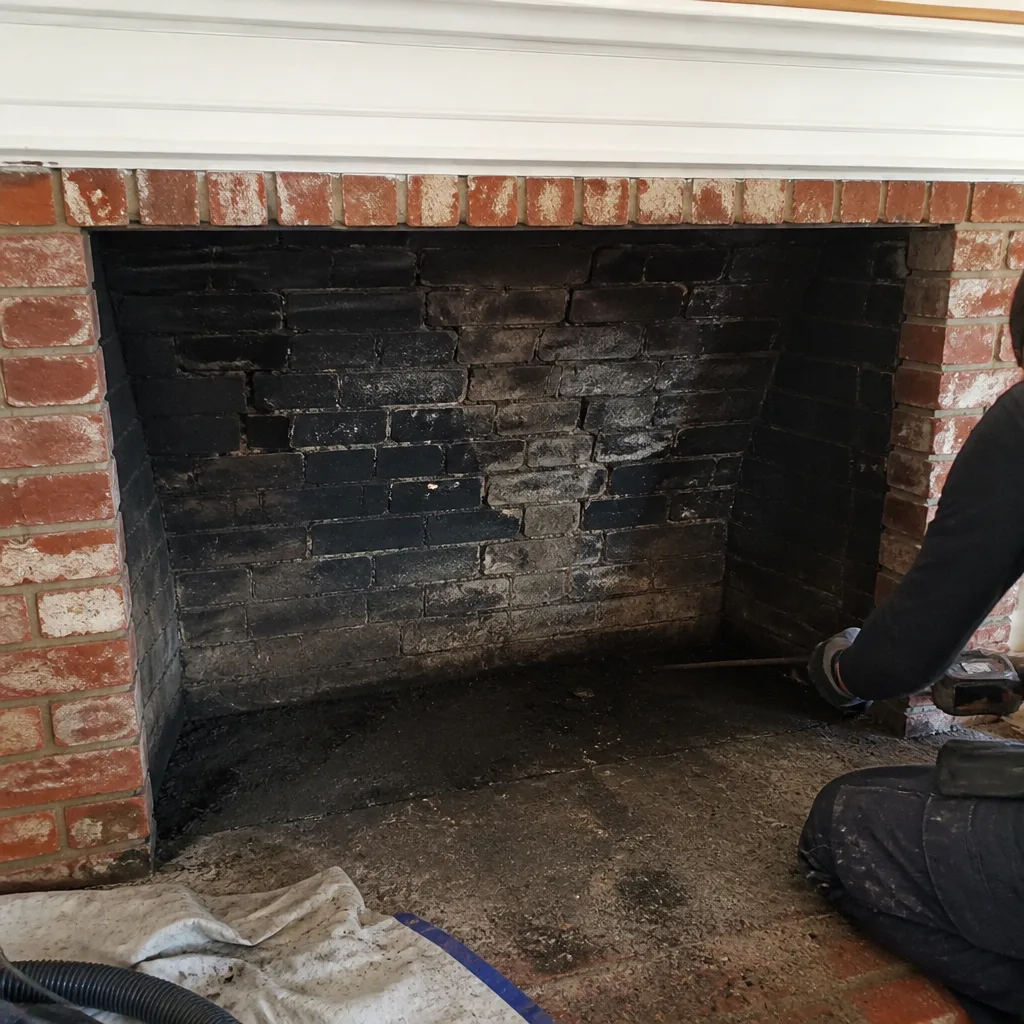 Before
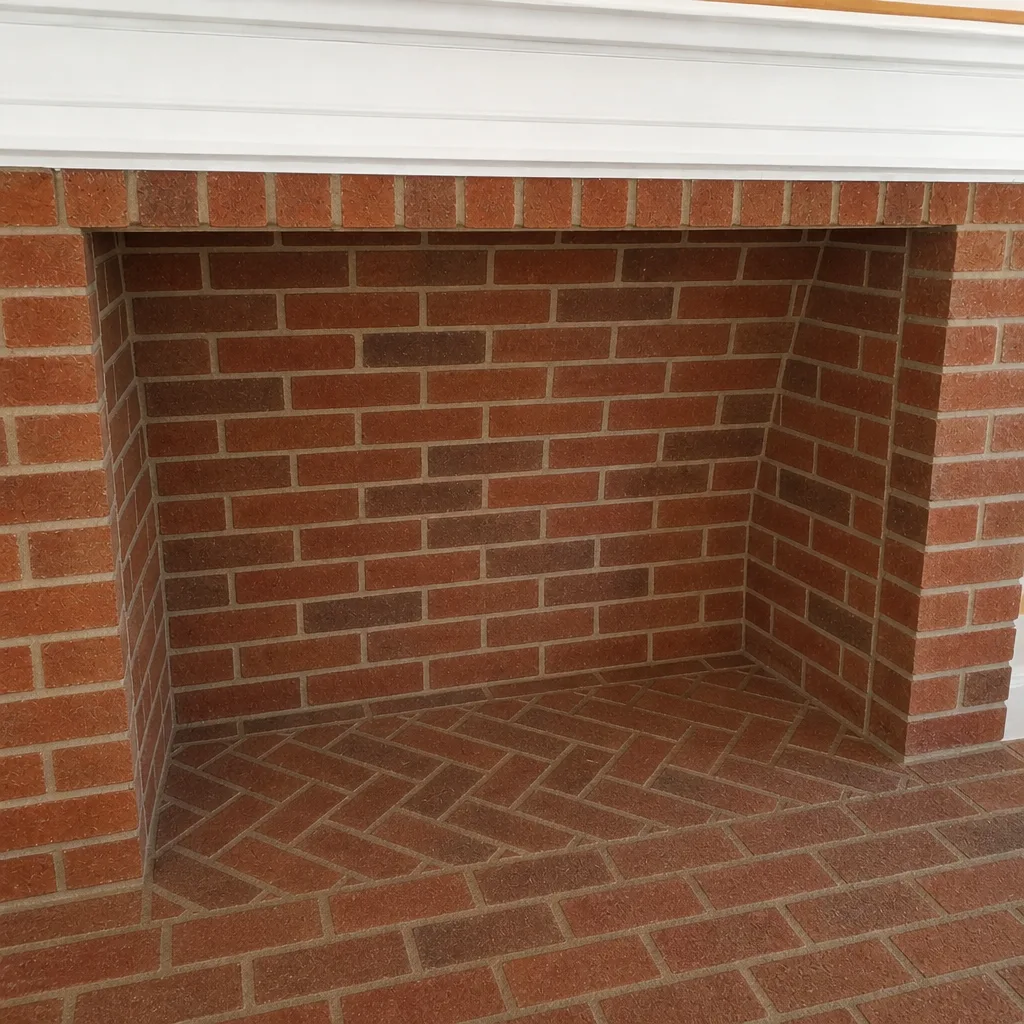 After
When to Call a Professional
Some situations need a trained technician, not a delay. Call if you see smoke rolling back into the room, smell a strong creosote or burning odor when no fire is lit, or notice water staining on the chimney or ceiling near it. A visible nest in the flue, a cracked or missing cap, crumbling mortar, or a firebox showing cracks all warrant a look. Any time you’ve burned heavily and haven’t had the flue inspected, a camera inspection is the honest way to know whether a sweep is due.
Chimney Sweep Porter Ranch offers free estimates in Porter Ranch. Call (855) 658-5280. We answer 24/7. Fast dispatch from 7am to 7pm, Sunday through Friday. A local pro is licensed and insured as their state requires, the flat-price sweep is agreed before booking, and the camera inspection and photo report are included so you can see the condition of your own flue.
Frequently Asked Questions
An annual inspection is the baseline, but the sweep interval should follow your actual burn hours. Light use may only need sweeping when the inspection shows buildup, while moderate or heavy use may need it more than once a season. A camera inspection shows the creosote stage and sets the right interval for your chimney. Call (855) 658-5280 to book an inspection and see the condition of your flue for yourself.
Yes. A chimney that sat unused can still collect bird nests, wind-blown dust, and cap damage. Porter Ranch’s dry season and Santa Ana winds push debris into any opening, so a summer visual check catches problems before fall. It’s a quick look, not a full sweep. Call (855) 658-5280 for an exact quote on a mid-year inspection – estimates are free.
Creosote keeps building, and in an intermittent-burn household it can reach stage 2 or glazed stage 3 faster than expected. A blocked or heavily creosoted flue raises the risk of a chimney fire and can let carbon monoxide into the home. A missed year also means a missed inspection, so a small liner or crown issue can turn into a bigger repair. Call (855) 658-5280 for an inspection and estimate.
Yes. A damaged cap or screen is the open door for birds, rain, and wind-driven debris. Sparrows and swifts are common in Porter Ranch flues, and once a nest is established, it blocks airflow and is flammable. We install professional-grade Gelco and Famco caps sized for your specific flue. Call (855) 658-5280 for a cap inspection and free estimate.
A sweep removes soot and creosote; an inspection tells you what caused it and whether the liner, cap, crown, or firebox needs repair. A sweep alone can miss a cracked liner. We do both in the same visit, with a camera inspection and photo report included, so you can see the condition of your own system. Call (855) 658-5280 for an exact quote.
A heavy creosote layer can ignite if the flue gets hot enough, and an obstructed flue can let carbon monoxide into the home. Stage 2 and stage 3 deposits are the ones to watch. A camera inspection shows you the layer and the stage so you know whether to sweep before lighting the next fire. Call (855) 658-5280 – estimates are free.
The Bottom Line
Chimney care in Porter Ranch is a year-round rhythm, not a single autumn task. Spring catches moisture and bird nests, summer catches wind-season damage before it matters, fall is the pre-season cleaning and inspection window, and winter is where burn habits decide how fast creosote forms. The right sweep interval follows your actual burn hours, not the calendar alone. The through-line in all of it is evidence: a camera inspection and photo report show you what’s in your flue, we tell you when work can safely wait, and the flat-price sweep is agreed before booking. That’s how a chimney stays safe from the first cool evening to the last.
Written by the team at Chimney Sweep Porter Ranch.