
Last updated November 22, 2026
 Sweep & inspection
 Caps & crowns
 Flue relining
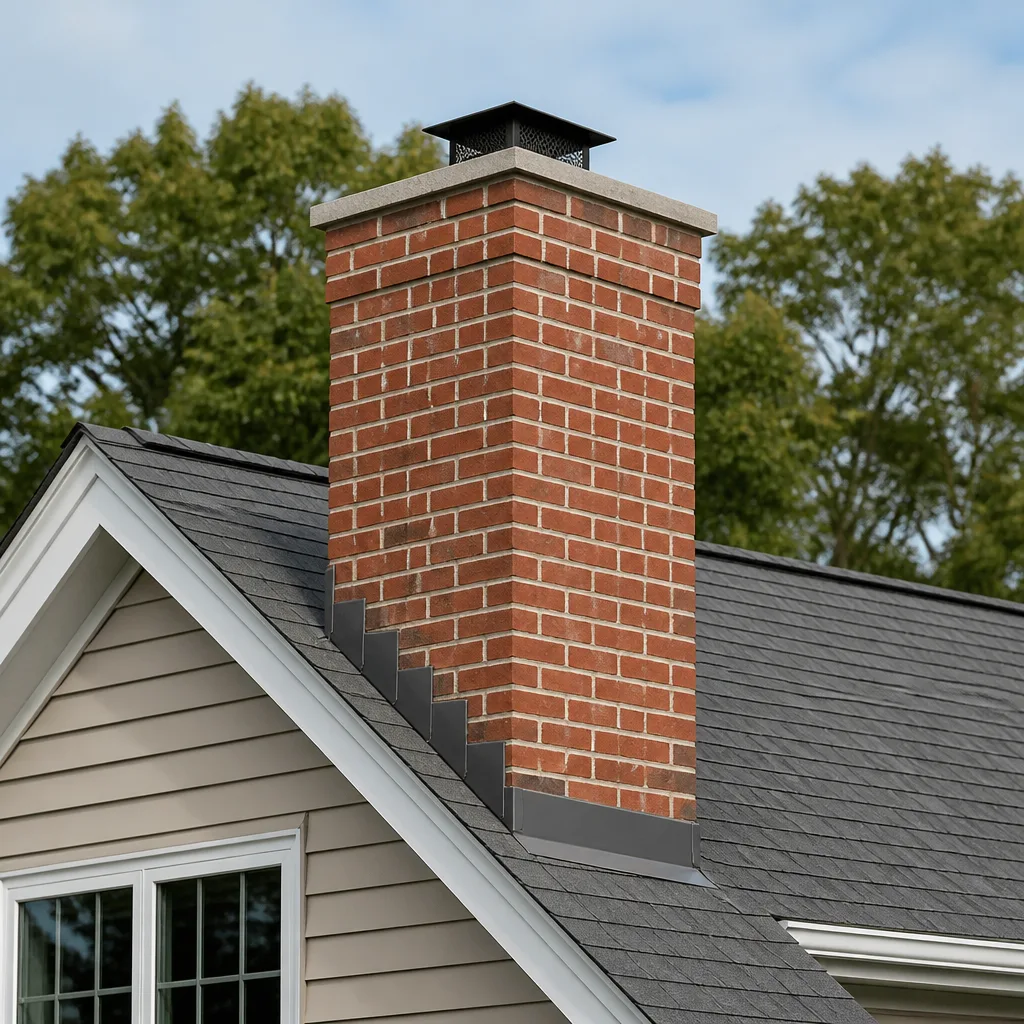 Masonry repair
 Gas fireplace service
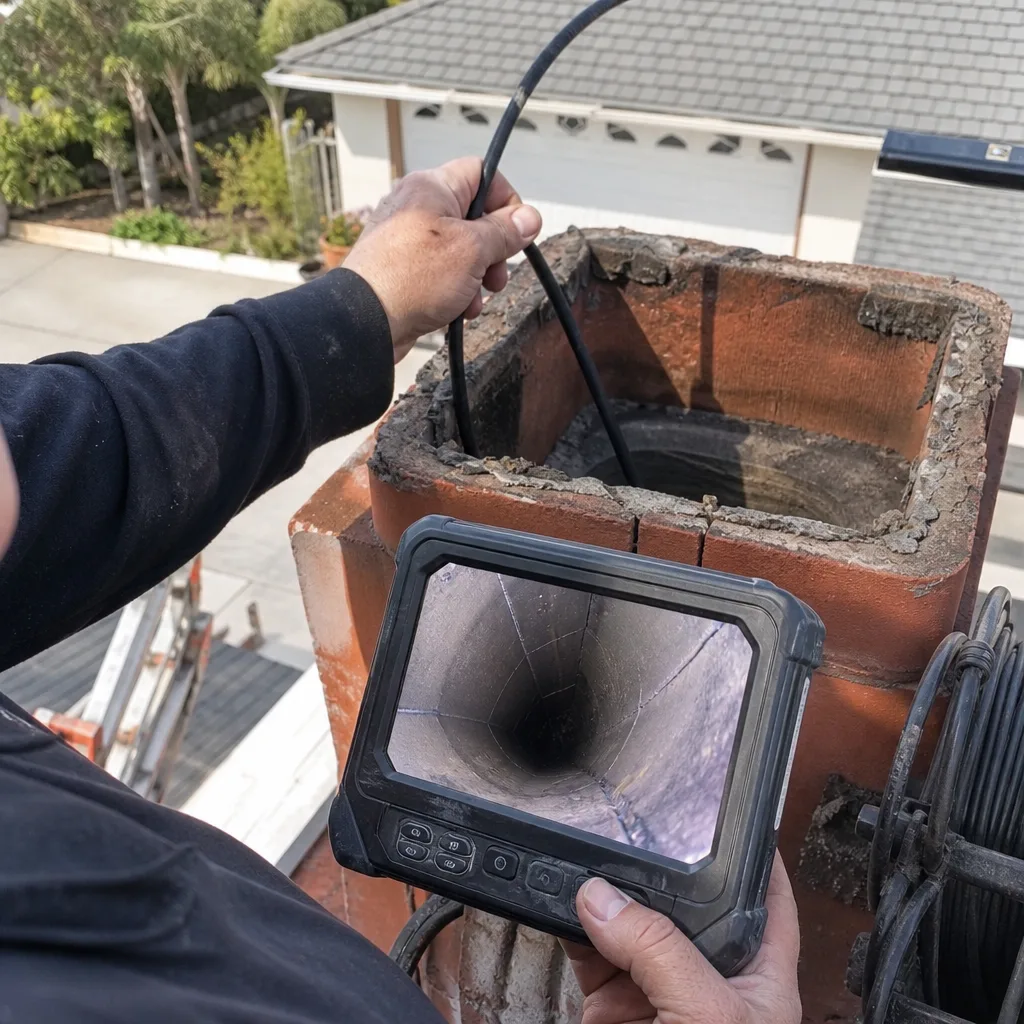
Level 1 sweep and inspection to the NFPA 211 annual standard - flue, crown, cap, and flashing checked and photographed
Chimney sweep logs do not sweep chimneys. They loosen some creosote - which then falls where a brush and vacuum still have to collect it.
Chimney Sweep Maintenance Checklist for Porter Ranch Homeowners
A homeowner can spot a cracked firebox tile from across the room. What almost nobody catches is stage-2 creosote glaze coating the inside of the smoke chamber, because it doesn’t look like a hazard. It looks like a dark wall. That difference matters more than any other single thing in chimney maintenance: the problems you can see from the hearth are the small ones, and the problems that cause chimney fires live in the parts of the system you can’t see at all. This checklist is built around what a trained sweep actually inspects and why each item connects to combustion safety and structural integrity. We’ll separate the checks you can do yourself from the ones that require tools and training, explain what moves a Porter Ranch home from annual to semi-annual service, and show you what to document after every visit.
Quick Answer
A chimney maintenance checklist for Porter Ranch homeowners should cover three layers: what you can observe yourself (damper operation, visible firebox cracks, cap presence), what only a trained sweep can assess (flue liner condition, smoke chamber parging, creosote stage classification), and seasonal timing tied to the local rain season from December through March. Annual inspection and sweeping is the baseline for most homes. Homes that burn frequently, burn softer woods, or use the fireplace during wind-driven power outages need semi-annual service. Every visit should end with a written report you keep for insurance purposes.
Styles & brands we work with
- Sweep & inspection
- Caps & crowns
- Flue relining
- Masonry repair
- Gas fireplace service
Table of Contents
- What You Can Check Yourself Between Professional Visits
- What Only a Trained Sweep Can Assess
- Annual vs. Semi-Annual Service: Which Applies to Your Home?
- How to Test Damper Seal Quality at Home
- Cap and Crown Inspection Before the Rain Season
- What to Document After Every Sweep Visit
- Understanding Creosote Stages and Why It Matters
- The Full Professional Inspection: What Gets Checked and Why
What You Can Check Yourself Between Professional Visits
These are the items a homeowner can reasonably assess without climbing on the roof or reaching into the flue. They won’t replace a professional inspection, but they’ll tell you when something has changed and needs attention before your next scheduled visit.
Your Homeowner Checklist
- Damper operation. Open and close the damper fully. It should move without grinding, sticking, or wobbling. A damper that won’t seat flush when closed is leaking heated air up the flue year-round and letting cold air down in winter.
- Visible firebox cracks. Shine a flashlight on the firebox brick and mortar joints. Hairline cracks in the mortar are common and not automatically a problem. Cracks wide enough to catch a fingernail, or any crack that lets you see the structure behind the brick, need professional evaluation.
- Cap presence. Look at the top of the chimney from ground level with binoculars. There should be a cap with mesh screening over the flue. No cap means rain, birds, and debris have direct access to the flue.
- Creosote at the flue top. From the firebox, look up with a flashlight. You’ll see the first few feet of flue. Any shiny, tar-like coating visible there is a sign of glazed creosote further up, and it’s time to call for a sweep.
- Smoke draw. Light a small piece of paper in the firebox with the damper open. Smoke should rise steadily up the flue. Smoke that spills into the room or drifts back down indicates a draft problem or a partial blockage.
- Exterior condition. From the ground, check that the chimney isn’t leaning, that mortar joints between exterior bricks aren’t crumbling, and that no bricks are missing or spalling.
These six checks take about ten minutes and catch most of the changes that happen between professional visits. What they don’t catch is the interior condition of the flue liner, the smoke chamber, or the crown at the top of the chimney, which is why the professional layer of this checklist exists.
What Only a Trained Sweep Can Assess
The interior of a chimney is a closed system that changes slowly and invisibly. Some of the most consequential problems we find during a chimney sweep are ones the homeowner had no way to see, and no reason to suspect. That’s not a knock on homeowners; it’s the nature of a system that’s designed to vent combustion byproducts out of the house without anyone looking at it.
Items That Require Tools and Training
- Flue liner condition. The liner is the innermost surface the smoke travels against. Clay tile liners crack and spall with heat cycling; metal liners can separate at seams or corrode at joints. A sweep inspects the full length of the liner with a camera and identifies gaps that would let heat reach combustible framing.
- Smoke chamber parging. The smoke chamber is the tapered section above the damper, before the flue. Its walls should be smooth so smoke moves up and out rather than swirling and depositing creosote. Rough, corbeled, or unparged walls in this chamber are one of the most common causes of accelerated creosote buildup. HeatShield ceramic resurfacing is the material we use to restore a smooth, sealed smoke chamber surface; it’s a specialist application, not a paint-on product.
- Creosote stage classification. Stage 1 is soot and flaky deposits that brush away. Stage 2 is hardened, crusty creosote that requires mechanical removal. Stage 3 is glazed, tar-like creosote bonded to the liner surface, and stage 3 inside a flue is a fire hazard that won’t brush off with a standard sweep. The sweep’s job is to identify the stage and tell you what removal method the buildup actually calls for.
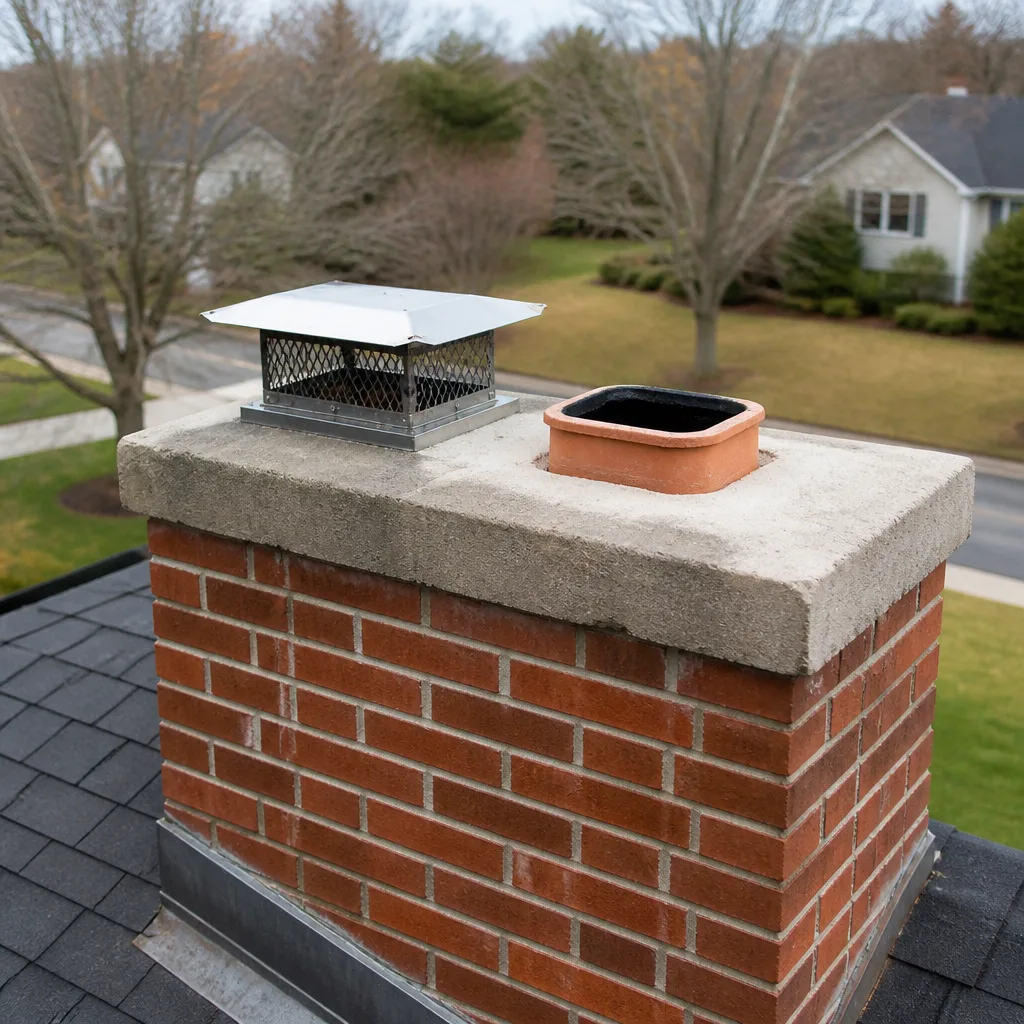
- Crown and cap condition. From the roof, a sweep checks the crown for cracks, the cap for corrosion or missing screen, and the flue tile tops for spalling. Cracks that look cosmetic from the ground are often the source of slow water intrusion when examined up close.
- Draft measurement. A draft gauge measures the pressure inside the flue under operating conditions. Low draft causes smoke spillage; excessive draft can pull heat up the chimney faster than the fire produces it. Neither is visible to the eye.
- Clearance to combustibles. The required air gap between the chimney structure and nearby framing is invisible inside the wall cavity. A sweep who finds insufficient clearance during inspection flags it before it becomes a fire pathway.
Each of these items feeds into the same question: is this chimney safe to burn in, and if not, what specifically needs to change? A sweep who cleans but can’t answer that question has done half the job. That’s why we handle the full cycle, from inspection through chimney repair, without handing you off to a second contractor who has to start the diagnosis over.
Annual vs. Semi-Annual Service: Which Applies to Your Home?
Annual service is the baseline for most homes with a wood-burning fireplace, but it’s not the right interval for everyone. Three factors push a Porter Ranch home to semi-annual service: burn frequency, wood type, and backdraft use during wind events.
When Annual Service Is Usually Enough
- The fireplace is used a few evenings a week during the cool months and sits idle the rest of the year.
- The wood burned is well-seasoned hardwood, split and stacked to dry for at least a year.
- No power outages in the recent past required using the fireplace as a heat source during wind events.
- The sweep’s report from the previous visit showed light stage-1 creosote only.
When Semi-Annual Service Is the Right Call
- The fireplace is used most evenings through the cool months, especially if it burns all day on cooler stretches.
- Softwoods, unseasoned wood, or construction scraps make up any meaningful share of the fuel burned. These produce significantly more creosote per cord than seasoned hardwood.
- The home lost power during a wind event and the fireplace was used as the only heat source for a day or more. Fireplaces running continuously through a wind event draw harder and cooler than normal, and the resulting creosote deposits faster.
- The previous inspection found any stage-2 creosote.
- The flue is on the shorter side, which reduces draft and slows the exit of smoke, giving creosote more time to condense on the liner.
Porter Ranch sits in the northern San Fernando Valley, where the cool season brings the Santa Ana winds through the passes and along the ridgelines. Those wind events are the common thread linking many of the homes we see on semi-annual service: the fireplace gets used harder during outages, and creosote accumulates faster than the annual schedule would catch. If your home has seen more than one outage-driven burn season, ask for a mid-season inspection between your annual visits.
How to Test Damper Seal Quality at Home
Damper seal quality is one of the easiest items to test at home and one of the most commonly skipped. A damper that doesn’t seal properly lets heated room air escape up the chimney all winter and leaks outside air into the house in summer. It also affects draft behavior during a fire.
The Tissue or Incense Test
- Make sure the firebox is cold and there’s no active fire or embers. Never run this test with any heat in the fireplace.
- Close the damper fully.
- Hold a single square of tissue paper, or a lit incense stick, just below the damper plate near the front edge of the firebox.
- Watch the tissue or the smoke stream for draw. If the tissue flutters or the incense smoke pulls upward into the closed damper, the seal is leaking.
- Repeat at several points along the damper edge to find where the leak is worst.
A small amount of leakage is normal on a metal damper; the seal isn’t airtight by design. What you’re looking for is a strong, steady pull, which indicates a warped plate, a worn seal gasket, a bent hinge, or debris lodged in the seat. Any of those will get worse over time and should be flagged for inspection. If the damper is difficult to move or won’t sit flat against the frame, that’s also worth mentioning at your next visit. Damper repair falls under fireplace repair, along with firebox brick and mortar work, grate replacement, and other components of the firebox assembly.
Cap and Crown Inspection Before the Rain Season
The rain season in Porter Ranch runs roughly December through March, and that’s the window in which a cracked crown causes the most damage. Water that gets into the chimney structure in December has months of wet weather to work its way down through the masonry before spring drying begins.
What a Cap and Crown Inspection Covers
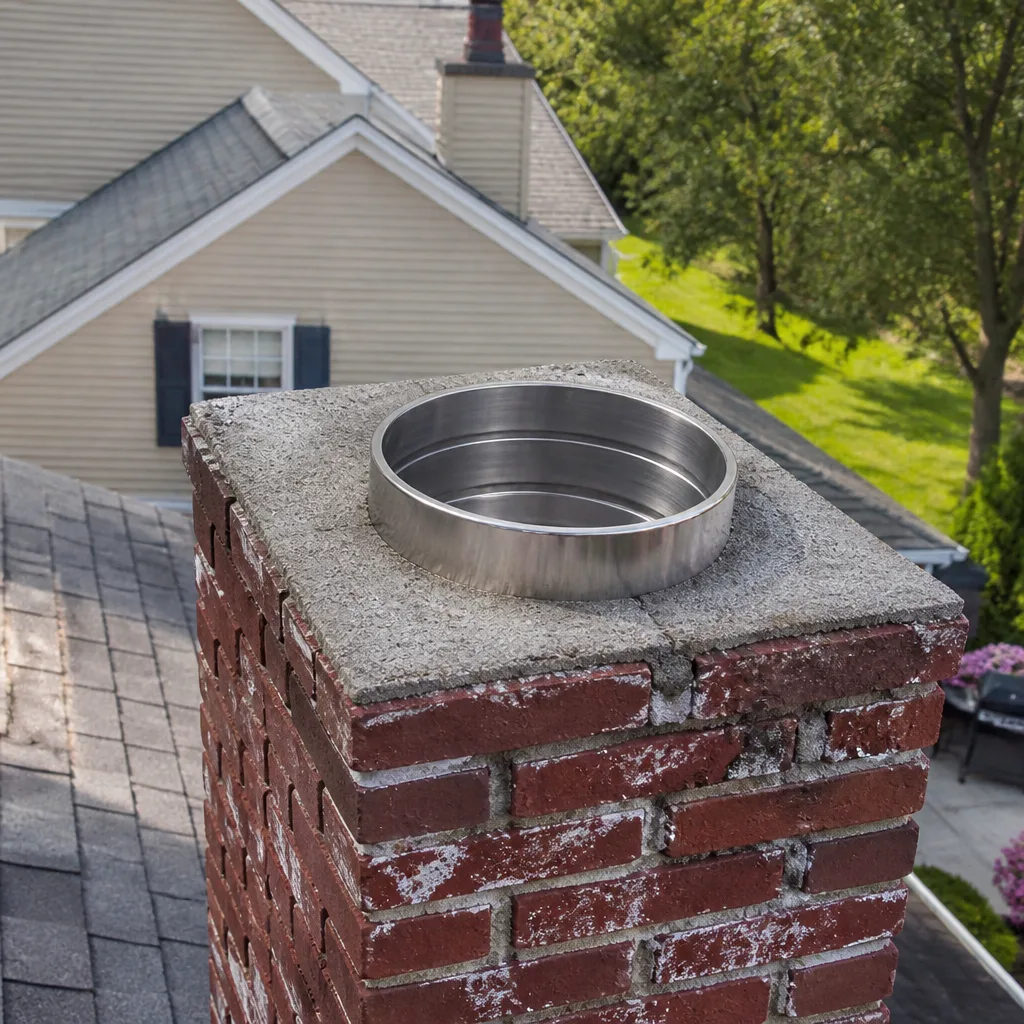
- Crown cracks and gaps. The crown is the concrete or mortar cap at the very top of the chimney that sheds water away from the flue and masonry. Hairline cracks are common. Any crack wide enough to admit water is a problem, and the fix is usually a crown repair or reconstruction rather than a patch, because a patched crown rarely lasts more than a season or two.
- Crown-to-flue joint. The joint between the crown and the flue tile is the most common entry point for water. It should be sealed with a flexible, high-quality sealant. Generic caulk from a hardware store breaks down quickly under UV exposure and temperature cycling.
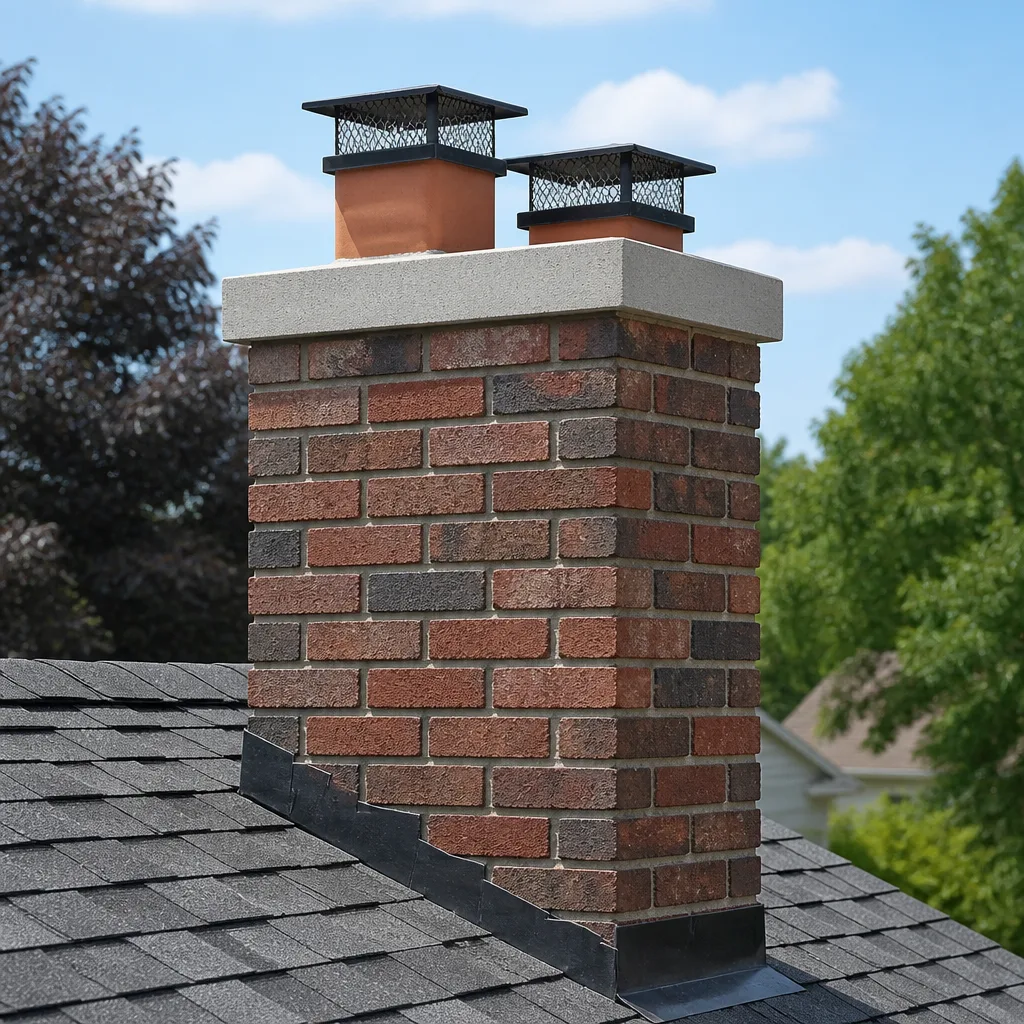
- Cap condition. A proper cap protects the flue opening from rain, debris, and birds. A cap with a rusted or missing screen, a bent frame, or a failed fastener is doing half its job. Gelco and Famco chimney caps are the professional-grade hardware we install, and they last far longer than the generic aftermarket covers sold at hardware stores.
- Flue tile tops. The tops of the flue tiles should be intact and properly cemented. Spalling or missing sections at the top let water into the space between the flue and the outer masonry.
- Spark arrestor function. If the cap has a spark arrestor, the mesh should be intact and clear. Clogged mesh reduces draft; torn mesh lets embers through.
Getting a chimney cap & crown inspection done before the first significant rain of the season is the single most cost-effective step in whole-house chimney maintenance. Water is the leading cause of masonry deterioration, and almost all of it enters at the top. If your crown has visible cracks and the previous inspection didn’t flag them, that’s worth a second look.
What to Document After Every Sweep Visit
Keeping a service log is one of the most useful habits a homeowner can adopt, and almost no one does it. The record has two purposes: it helps the next sweep understand the history of the system without starting from scratch, and it provides documentation of maintenance in the event of an insurance claim after a chimney fire.
What to Keep After Each Visit
- The written inspection report. Ask for a report that identifies every item inspected, its condition, and any recommended follow-up. A report that says “chimney swept” without detailing condition is a receipt, not a record.
- Photos of the flue interior. A camera inspection should produce images of the liner along its full length. These are the baseline for identifying future deterioration.
- Creosote stage documentation. Record the stage found at that visit. If the stage increased from one visit to the next, the burn habits or the wood supply likely need adjustment.
- Recommendations and whether they were completed. Track any deferred items. A crown repair recommended in one season and not done by the next should be the first item checked at the following visit.
- The date, the technician’s name (or company), and the scope of work. Insurance adjusters look for a clear maintenance history, and the more specific the record, the more useful it is.
Store the log somewhere you’ll find it, either a binder in a home file or a scanned folder. If you sell the home, the log becomes a selling point. If you ever have a fire, it becomes evidence that the system was maintained in accordance with the sweep’s recommendations. Olympia Chimney liners, DuraFlex liner systems, and every other material we install comes with its own documentation, and that paperwork belongs in the same file as the inspection reports.
Understanding Creosote Stages and Why It Matters
Creosote is the byproduct of incomplete wood combustion, and it deposits on the inside of the flue in three distinct forms. Each stage requires a different removal method and carries a different risk level.
Stage 1: Soot and Flaky Deposits
Stage 1 creosote is the light, dusty, flaky coating that builds up during normal burning. A standard chimney brush removes it in a routine sweep. Most Porter Ranch homes on an annual schedule with well-seasoned wood reach this stage and stop there.
Stage 2: Hardened Crusty Deposits
Stage 2 creosote is hardened, crusty, and bonded to the liner surface. A standard brush passes over it without removing it. Mechanical removal with specialized tools is usually required. The presence of stage 2 signals that either the burn habits, the wood quality, or the draft characteristics of the chimney changed in the recent past, and it usually moves the home onto a semi-annual schedule.
Stage 3: Glazed Creosote
Stage 3 is the tar-like, shiny coating that causes the majority of chimney fires, and it’s the one homeowners almost never spot because it looks like a dark, smooth wall. It requires chemical treatment followed by mechanical removal, and in some cases the liner must be replaced if the coating has compromised the liner surface. A camera inspection is the only reliable way to identify stage 3 inside the flue, and the sweep is the person who classifies it. Safety here is not a theoretical concern: glazed creosote ignites at temperatures a normal fire can produce, and once it ignites, it burns hot enough to crack liner tiles and reach combustible framing. That’s a reason to identify and remove it, not a reason to fear your fireplace. It’s also a reason not to attempt interior liner cleaning yourself; the tools and the height make it one of the genuinely dangerous jobs in home maintenance.
The Full Professional Inspection: What Gets Checked and Why
A full chimney inspection goes well beyond sweeping. These are the items a trained sweep checks on every visit, and what each one tells us about the system’s safety.
Inspection Protocol
- Exterior survey. Look for chimney lean, spalling brick, missing mortar, and cap and crown damage from ground level first, then from the roof. Establishes whether the chimney has moved structurally since the previous visit.
- Firebox evaluation. Check firebox brick for cracks, mortar joints for crumbling, and the fireback for heat damage. Note any gaps between the firebox and the damper frame.
- Damper and smoke shelf. Test damper operation, check for warping, and inspect the smoke shelf behind the damper for debris accumulation that reduces draft.
- Smoke chamber. Look for rough walls, missing parging, and creosote buildup in the transition zone above the damper. HeatShield resurfacing is the appropriate repair for rough or unparged chambers.
- Flue interior. Camera inspection of the full liner length. Check for cracked tiles, spalling, gaps at joints, separation at liner seams, and corrosion on metal liners.
- Draft measurement. Measure draft under operating conditions and note any spillage or draft irregularities.
- Crown and flashing. Check crown condition, flue tile tops, and flashing at the roof line for seal integrity.
- Clearance verification. Confirm clearance between the chimney and nearby framing, insulation, and combustibles.
Every one of those items has a reason it’s on the list. Flue liner condition matters because a compromised liner lets heat reach combustible framing. Smoke chamber parging matters because a rough chamber accelerates creosote buildup. Clearance matters because a properly vented fire depends on a proper air gap. The point of a full inspection is that it produces a complete picture, not a spot check. When we advise a repair, the recommendation is tied to a specific finding, not to a template.
At Chimney Sweep Porter Ranch, we handle the full cycle. Inspection identifies the problem, and the same team that found it does the corrective work. If the inspection shows your chimney is safe to burn in as-is, that’s the answer you’ll get. If it shows something that can wait, we’ll tell you that too. Our technicians have up to 13 years of experience, and we use professional-grade materials from brands chimney specialists trust, including DuraFlex liner systems, HeatShield ceramic resurfacing, and Gelco and Famco caps.
Common Mistakes to Avoid
- Skipping the inspection when the sweep says “it’s clean.” A sweep that only cleans is doing a partial job. If the report can’t tell you the creosote stage and the liner condition, ask for a proper inspection.
- Burning unseasoned wood to save money. Green wood produces far more creosote per cord than seasoned wood, and the savings on the wood get eaten by the accelerated buildup and the extra service the buildup requires.
- Assuming a cap isn’t necessary. The most common cause of a slow masonry problem is rain entering an uncapped flue. A properly fitted cap protects every part of the chimney above the firebox.
- Ignoring a cracked crown because it’s small. Crown cracks widen during the Porter Ranch rain season from December through March. A crack that looks minor in November is often significant by February.
- Patching a crown with generic caulk. Big-box sealants break down in a season or two, and the second crack is usually worse than the first. Crown repair or reconstruction with the right material is the correct fix.
- Forgetting to document the visit. Without a written report and photos, the maintenance history disappears. The record is what protects you if the chimney is ever involved in a fire or an insurance claim later.
- Letting a generalist repair the chimney. Handymen who work on every system in the house rarely have the tools or the material knowledge to fix a smoke chamber or install a proper liner. A single-trade chimney specialist does one thing and knows the material differences between brands.
See the difference
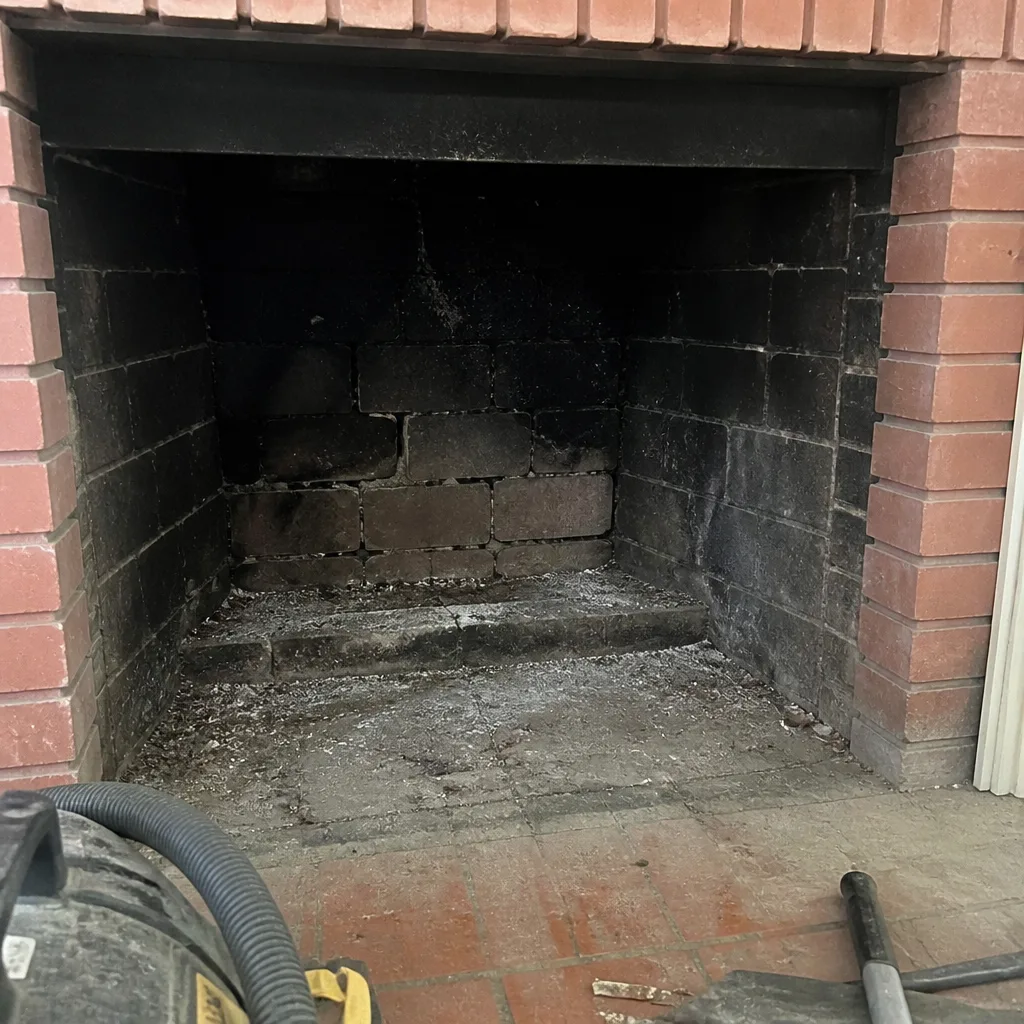 Before
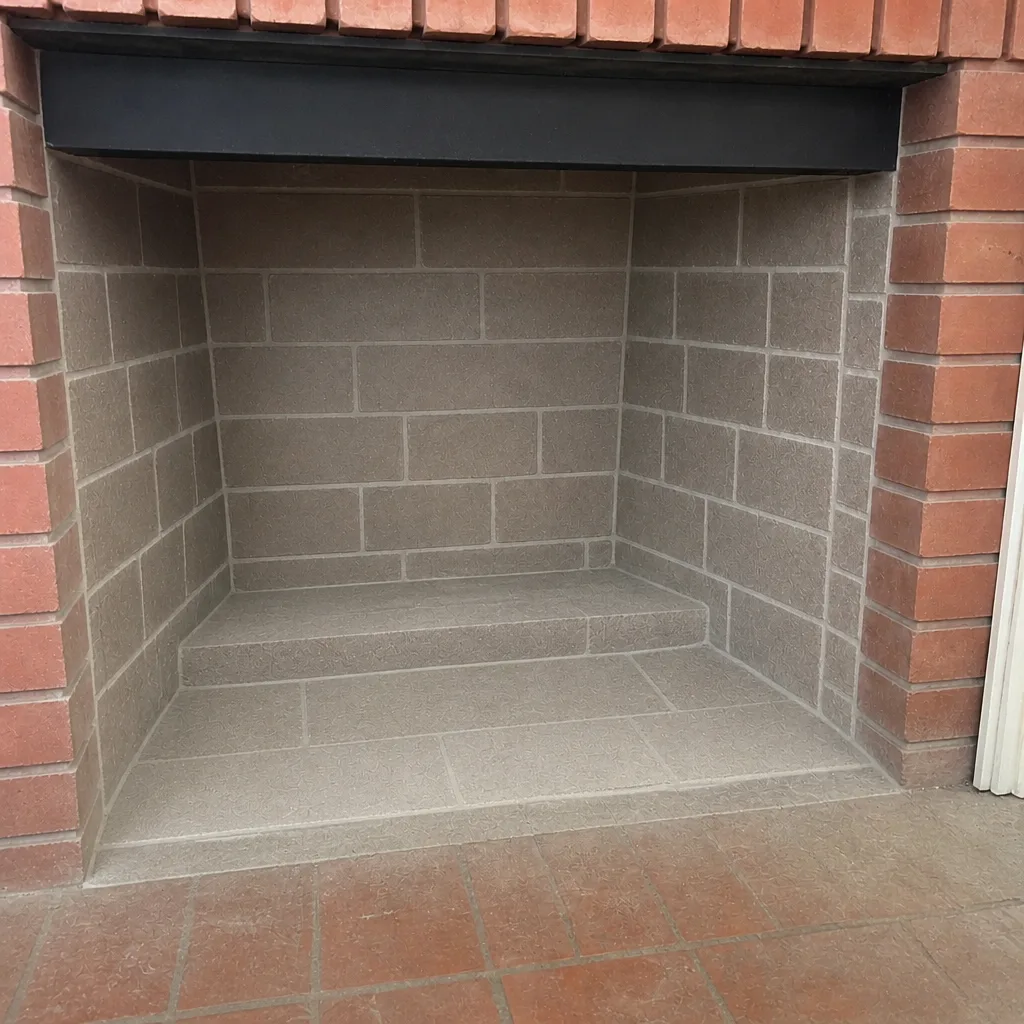 After
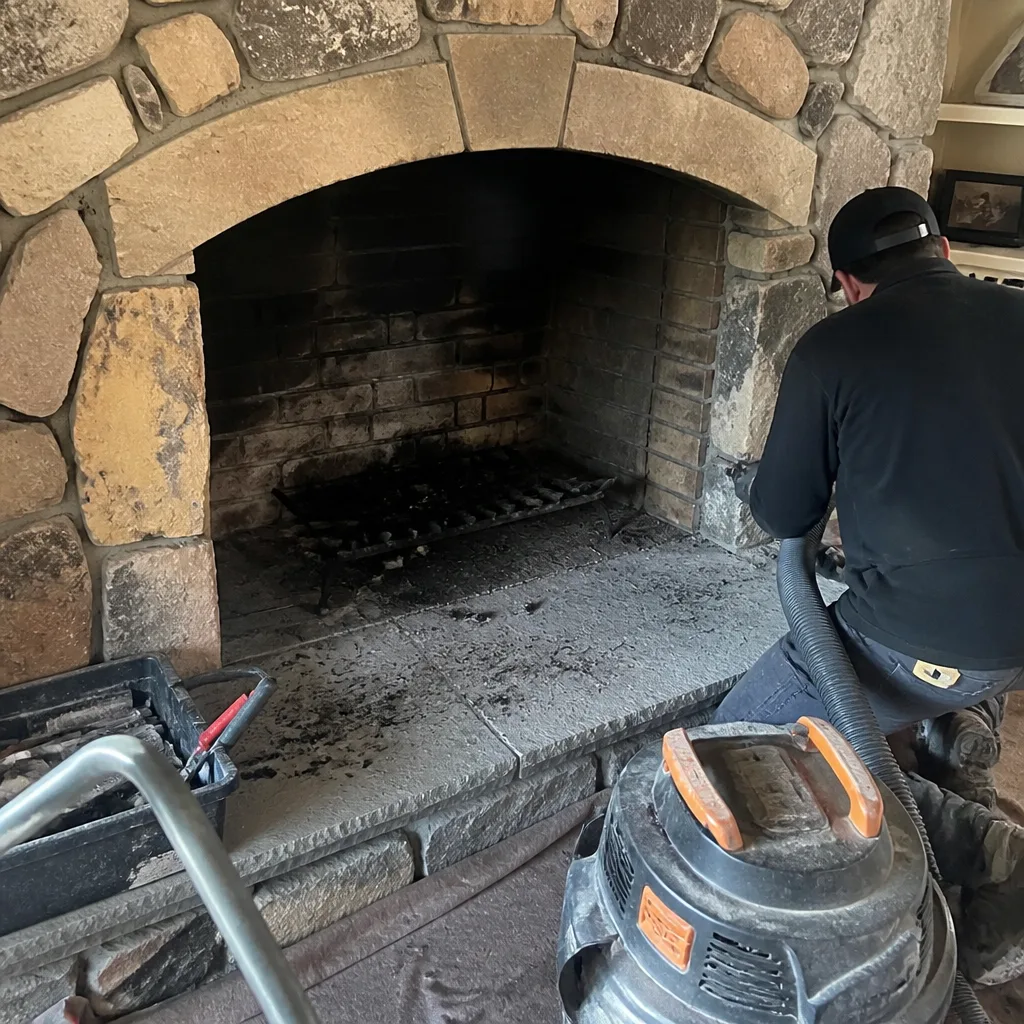 Before
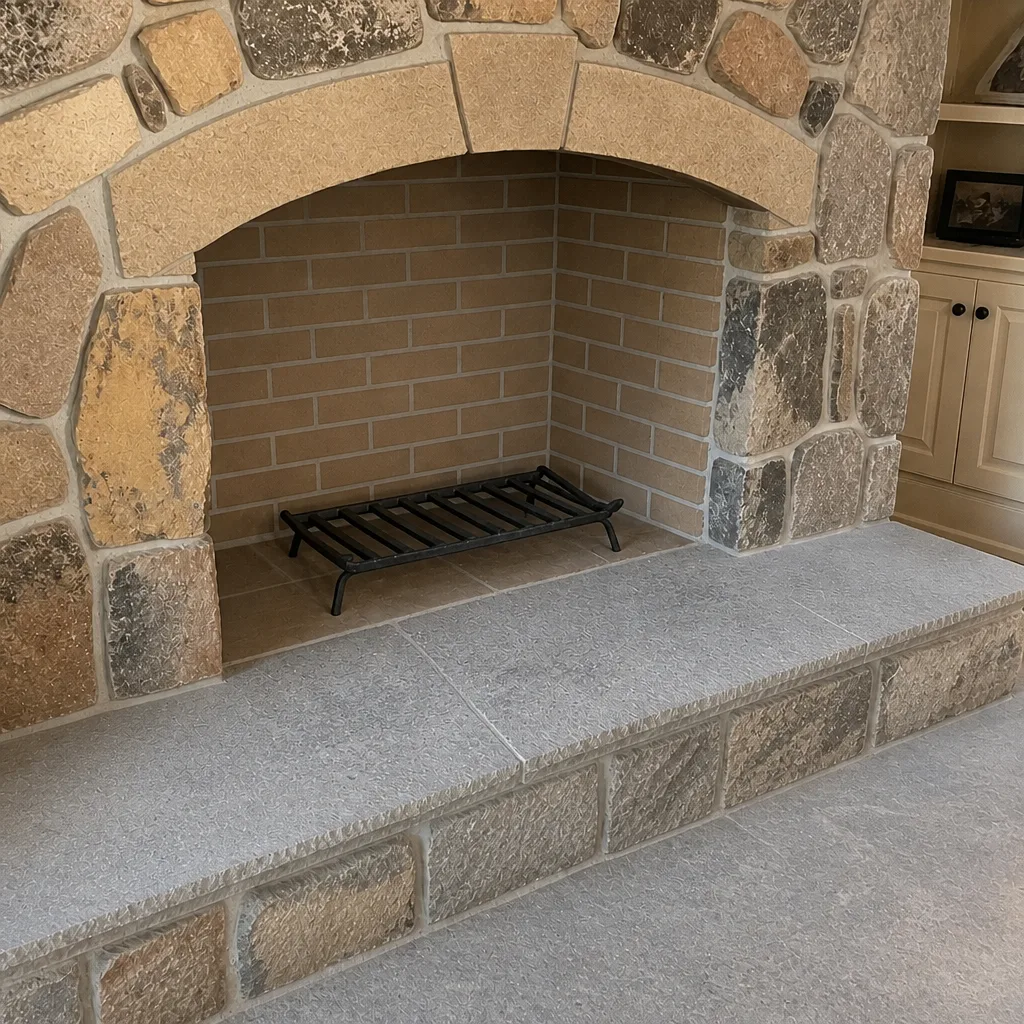 After
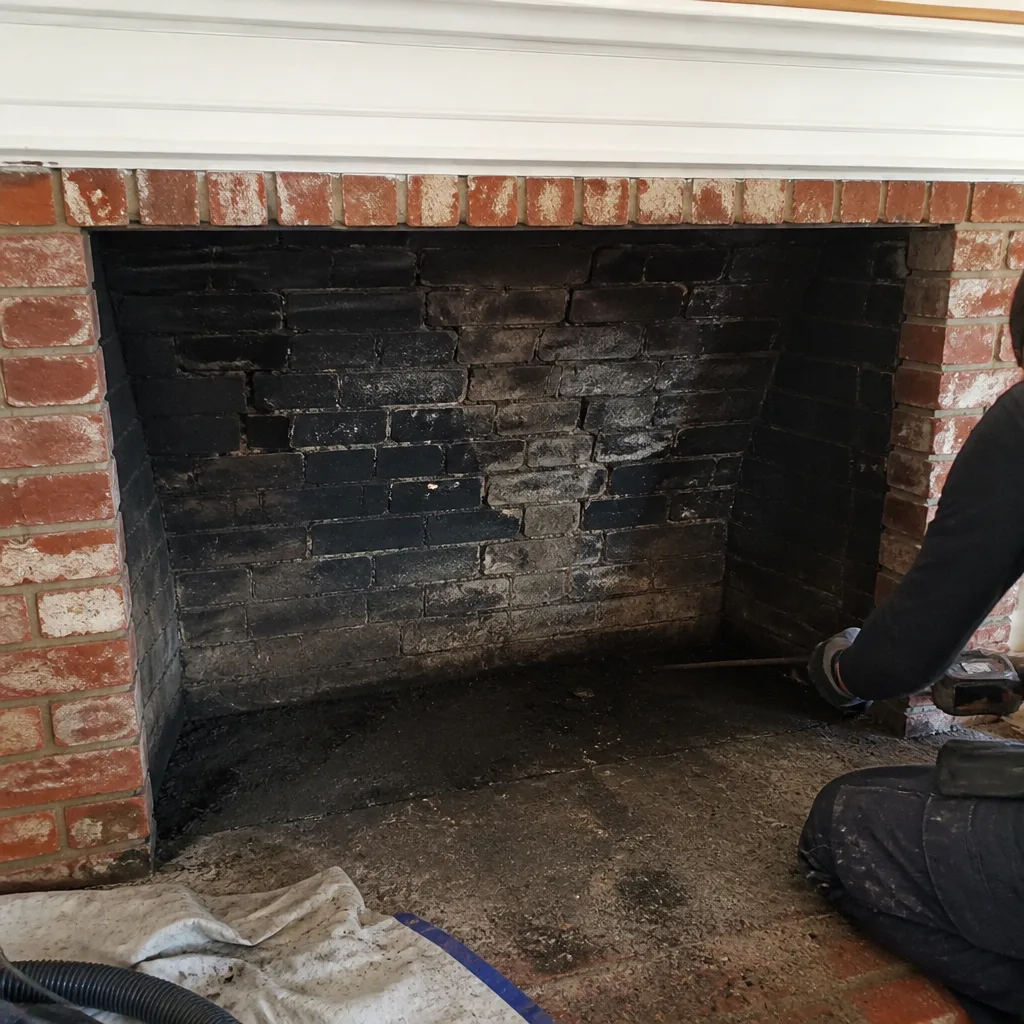 Before
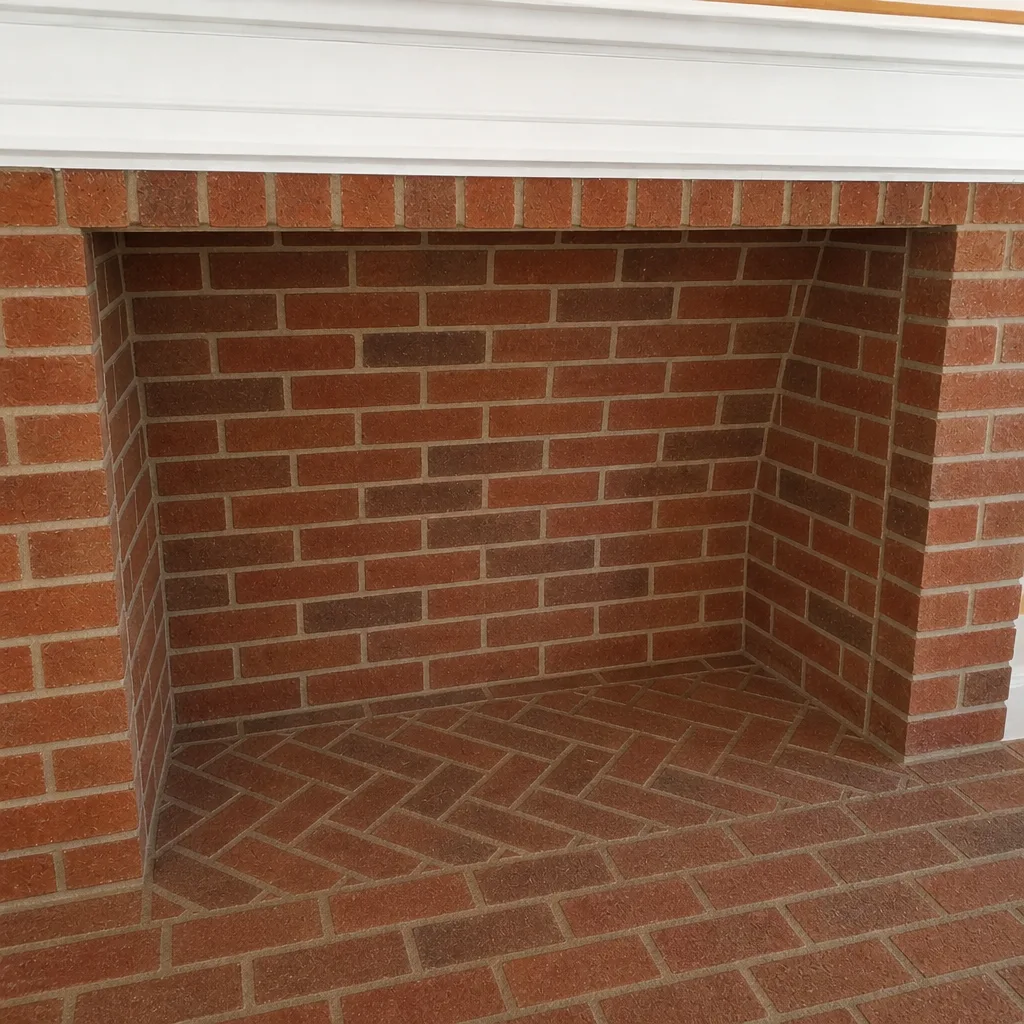 After
When to Call a Professional
Book a professional inspection or sweep if any of these applies: your last inspection was more than a year ago; you’ve burned wood all season or through a power outage; you can see shiny creosote at the top of the flue with a flashlight; the damper won’t seal against the frame; the exterior shows cracked or missing mortar; the crown has visible cracks and rain is on the way; or you’re buying a home in Porter Ranch and don’t know the chimney’s history. Call Chimney Sweep Porter Ranch at (855) 658-5280. We answer 24/7. Fast dispatch from 7am to 7pm, Sunday through Friday. Estimates are free, the price is set per job by the written estimate, and the sweep is agreed before we book the visit. If the inspection finds the chimney is safe to burn in, you’ll know; if it needs repair, the team that found the problem is the team that fixes it.
Frequently Asked Questions
Annual service is the baseline for most Porter Ranch homes with a wood-burning fireplace, and semi-annual service is appropriate for homes that burn frequently, burn softwoods or unseasoned wood, or used the fireplace during wind-driven power outages. The sweep’s report from the previous visit is the best guide: if stage-2 creosote showed up last time, move to semi-annual. Call (855) 658-5280 for an exact quote on a sweep. Estimates are free.
A sweep checks the flue liner condition, smoke chamber parging, creosote stage classification, draft measurement, crown and cap condition from the roof, and clearance to combustibles inside the wall cavity – all of which are invisible or inaccessible from the firebox. The homeowner layer covers damper function, visible firebox cracks, cap presence, and exterior condition. Both layers matter, but only one requires training and tools. Call (855) 658-5280 for an inspection. Estimates are free.
Hold a tissue or incense stick below the closed damper plate near the front edge of the firebox with the fire cold and no active embers, and watch for a flutter or a steady upward smoke pull. Any strong pull at the closed damper means the seal is leaking, usually from a warped plate, a worn gasket, or debris in the seat. That’s worth flagging at your next visit. Call (855) 658-5280 to book a damper inspection along with the sweep. Estimates are free.
The Porter Ranch rain season runs roughly December through March, so crown cracks that open in fall have months of wet weather to work water into the masonry before spring drying begins. Water is the leading cause of chimney masonry deterioration, and almost all of it enters at the top. Getting a cap and crown inspection done before the first significant rain of the season is the single most cost-effective maintenance step. Call (855) 658-5280 to schedule. Estimates are free.
Yes, if the chimney is used, because the liner is the barrier between combustion heat and the framing of your home, and it deteriorates invisibly. Cracked tiles and separated metal liner seams don’t announce themselves, and stage-3 glazed creosote on the liner is the main cause of chimney fires. A camera inspection produces images of the liner along its full length, and those images are the baseline for the following year. Call (855) 658-5280 for a camera inspection. Estimates are free.
Yes, because the log is what protects you if the chimney is ever involved in a chimney fire or an insurance claim, and it helps the next sweep understand the system’s history. Keep the written inspection report, camera photos of the flue, creosote stage, recommendations with completion dates, and the scope of work from each visit. Store it with the documentation that comes with any installed liner or cap. Call (855) 658-5280 to book a visit. Estimates are free.
The Bottom Line
The core of chimney maintenance is a division of responsibility: you handle the visible checks between visits, and a trained sweep handles the items that require tools, height, and camera inspection. Do the homeowner layer regularly. Book the professional inspection annually, or semi-annually if the burn habits call for it. Get the cap and crown checked before the Porter Ranch rain season begins in December. And keep the documentation after every visit, because the record is what protects you if the system is ever tested. A clean chimney is the starting point, not the finish line. We identify the problem and fix it, with professional-grade materials from brands the trade trusts. Call (855) 658-5280 for a free estimate in Porter Ranch.
Written by the team at Chimney Sweep Porter Ranch.